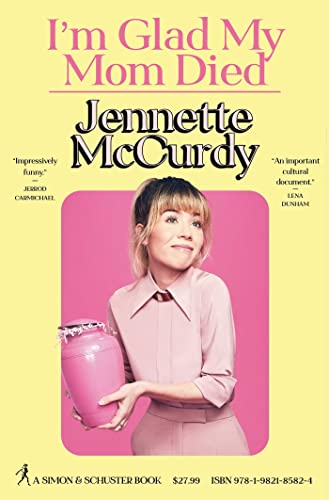
Pink walls, silent screams—
fame can’t heal a fractured child.
Truth blooms in the dark.
Jennette McCurdy’s I’m Glad My Mom Died is not your typical celebrity memoir. The title alone is a jolt—blunt, provocative, and uncomfortable—but it perfectly captures the emotional honesty and dark humor that runs through the entire book. What McCurdy offers is not just a behind-the-scenes look at child stardom, but a gut-wrenching and sharply written story of trauma, control, and ultimately, survival.
At its core, the book explores the suffocating effects of emotional abuse—particularly when that abuse is disguised as love. McCurdy chronicles how her mother, obsessed with making her daughter a star, exerted an all-consuming grip on every aspect of her life: acting roles, eating habits, personal boundaries, and even bodily autonomy. Her early success on shows like iCarly becomes secondary to the deeper story of a girl slowly realizing that her mother’s version of love was conditional and manipulative. Themes of control, codependence, eating disorders, addiction, and identity run throughout the memoir. McCurdy doesn’t tell her story with bitterness but with a raw clarity that makes each revelation feel both heartbreaking and illuminating. It’s a portrait of someone taught to erase herself in service of someone else’s dream—and the painful work it takes to reclaim a sense of self.
McCurdy’s vision for this book is not to provoke shock or pity, but to tell the truth—her truth—in her own voice, after years of being spoken for or performing what others expected. Her execution is striking: the writing is tight, darkly funny, and deeply personal. She balances heavy subject matter with moments of humor and absurdity, making the pain more bearable and the honesty even more effective. Each chapter reads like a scene from a play, compact and vivid, with the tone shifting easily from comedy to tragedy. Her voice is never self-pitying; instead, it’s clear-eyed and emotionally intelligent, allowing the reader to feel the confusion and conflict that comes from loving someone who has harmed you. The book is a brave act of storytelling, and a powerful example of how reclaiming your own narrative can be an act of healing.
I’m Glad My Mom Died is best suited for readers who appreciate memoirs that dig deep and don’t flinch from painful truths. It’s especially resonant for anyone who has experienced complicated family dynamics or struggled with boundaries, trauma, or the pressure to perform emotionally for others. This isn’t a light vacation read, though its style is accessible and propulsive—you might find yourself flying through it in a weekend. It’s ideal for a quiet evening or rainy afternoon, when you’re ready to sit with a story that is as emotionally raw as it is redemptive. For all its dark edges, McCurdy’s memoir is ultimately about freedom—the freedom to tell your story, even when it hurts.


 The Haiku Review
Leave a comment