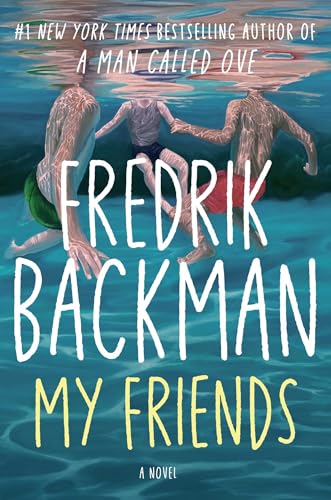
by Fredrik Backman
Pier’s laughter captured
Art holds grief and fleeting joy
Tomorrow whispers
A postcard can hold a lifetime, and in My Friends, that hidden moment becomes a bridge between grief and hope.
The novel centers on Louisa, an eighteen-year-old navigating foster care and the aftermath of losing her closest friend. Her fixation on a painting—three figures perched at the end of a pier—sparks a journey of discovery that alternates between her present and a pivotal summer 25 years earlier. In that forgotten season, four teenagers—Joar, Ted, Ali, and the artist C. Jat—found refuge in one another during turbulent home lives. Their laughter, loyalty, and shared pain are immortalized in that single image. When Louisa later encounters the now-famous artist and Ted, the past and present entwine, raising questions about loss, memory, and the threads that bind people across decades.
Backman’s vision is as gentle as it is profound, shaping a narrative that flows between timelines with emotional precision. He uses dual perspectives to enrich the portrait of the four friends—highlighting their youthful resilience and vulnerabilities—and contrasts it with Louisa’s solitary quest for connection. The magical realism of art becomes a vessel for universal themes: the transient nature of youth, the endurance of memory, and the transformative power of belonging. Backman doesn’t shy away from sorrow; scenes of conflict, abuse, or loss are portrayed with raw empathy, yet his storytelling remains suffused with warmth, humor, and hope . His prose—simple yet deeply evocative—captures the smell of the sea, the ache of longing, and the ache of letting go. Some may find the alternating timelines slow in parts, but this structure ultimately delivers a richly layered emotional payoff .
My Friends will resonate most with readers drawn to character-driven fiction that explores grief, art, and the bonds of chosen family. If you’ve been moved by novels like A Man Called Ove or Anxious People, or enjoy stories where friendship becomes salvation, this book will leave an imprint. Ideal for a rainy afternoon curled up by a window or a quiet weekend retreat, it’s the type of story you want to immerse yourself in fully—where emotional immersion, not escapism, reigns. Its introspective nature makes it a gentle companion, best savored when you can pause to reflect on your own friendships and memories.


 The Haiku Review
Leave a comment